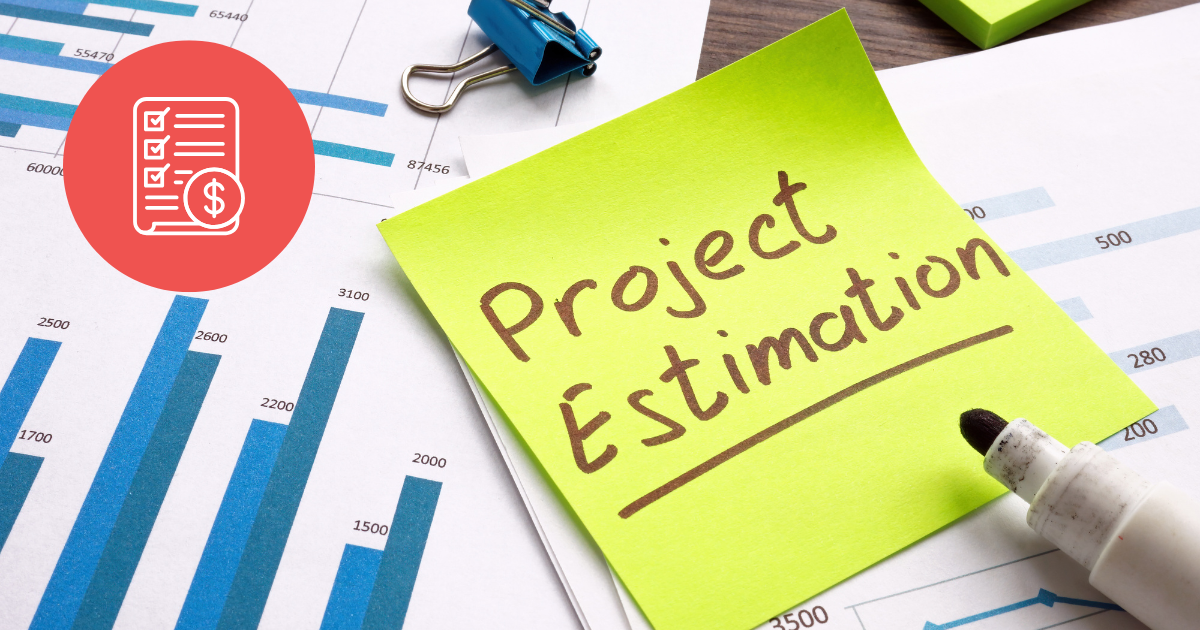
I was preparing a proposal for an external customer. Two columns: one using AI-powered engineering with Claude Code, Cursor, Codex and similar tools, one without. I had done many such estimates before, and I had a rough sense of how fast development is now with AI in the loop.
The number floating in my head for months was around 50% gain. Optimistic, I thought. Maybe wishful thinking.
So I went through the backlog, feature by feature, and estimated everything honestly. When I was done, the DEV column landed exactly between 40% and 60%. 60% gain where we had more room to use market-standard solutions like React, SCSS, established patterns; 40% gain where integrations were involved and the system was mostly closed to the outside world.
Almost exactly 50% on average. This is not a minor efficiency tweak. This is one of the biggest productivity shifts our industry has seen in decades, and it is happening right now, on live projects, with tools you can download today.
Where the gain is even bigger than you think
Here is the part I did not expect.
When I applied the standard coefficients for Analysis and Testing on top of DEV effort, I initially thought the picture would look worse. And yes, the multipliers I used for analysis and testing in the AI scenario were a bit higher relative to DEV because the gain in coding does not fully transfer to requirements gathering and manual testing.
But look at what this actually means: even with those adjusted coefficients, the total project savings are still substantial. We are compressing the biggest cost bucket in software delivery, engineering time, by half. That is the bucket that dominates every budget conversation I have ever been in.
And this is only the beginning. BA and QA tooling is catching up fast. Once BA and QA specialists build their own AI-assisted workflows, and it is starting to happen already, the gain will grow beyond just coding. We are watching the first wave of a much bigger transformation.
Fewer people, sharper team
There is another dimension that changes with AI-powered engineering: team size and composition. And this part is genuinely exciting for anyone who has ever suffered through a bloated project.
In a traditional development team you would typically staff 4–5 developers with a mix of seniority levels. In an AI-powered setup you need fewer people — two senior developers is the right answer. Small squad, tight communication.
Anyone who has worked in software delivery knows the pain of large teams: coordination overhead, meetings about meetings, integration conflicts, diluted ownership. AI-powered engineering makes small elite teams viable for scope that used to require a proper crew. Teams larger than 3 in an AI-powered squad become genuinely hard to manage — the AI moves so fast that the bottleneck shifts to human coordination.
Two seniors, one clean backlog, a couple of months. That is a delivery model most engineers dream about. And it now delivers what previously required twice the headcount.
For a project with 100 man-days of effort, two senior developers over 2–3 months is the sweet spot. Not compressed to two weeks — that is not the goal — but delivered by a small focused team producing genuinely more per person than we ever could before.
The overhead is still there — and that is fine
To be fair: development, analysis, and testing are not the whole project. Every real delivery still has project management, triage phases, stakeholder meetings, and dependency delays. Those do not compress at the same rate as code generation.
But that is not a disappointment. That is just the reality of delivering software to real customers with real constraints. The AI gain sits on top of that reality — and even after the overhead, we are still delivering meaningfully faster and cheaper than we ever have.
The 50% gain in coding does not turn into a 50% gain in total project cost. It turns into something like 40% at the whole-project level. Which is still one of the biggest improvements in software delivery economics in a very long time.
So what does 50% really mean?
It means projects that used to take four months now take two and a half. It means proposals that used to lose on price now win. It means the small consulting shop can compete with the big integrator. It means the internal team can finally clear the backlog they have been staring at for two years.
It means the industry is quietly transforming. And crucially, it means developers who lean into these tools now are riding the wave, not fighting it. The ones who ignore it will find themselves in a hard conversation in the near future.
Final thought
The 50% coding gain is not the ceiling. It is the starting point of a much longer curve.
BA workflows will improve. QA automation will mature. Project intelligence tools will reduce coordination overhead. Every one of those layers is next in line for the same kind of transformation coding is going through right now.
But even if we froze the tools where they are today, the gain would still be historic. Half the coding effort. Smaller, sharper teams. Faster delivery. Better economics.
Exciting time to be here.